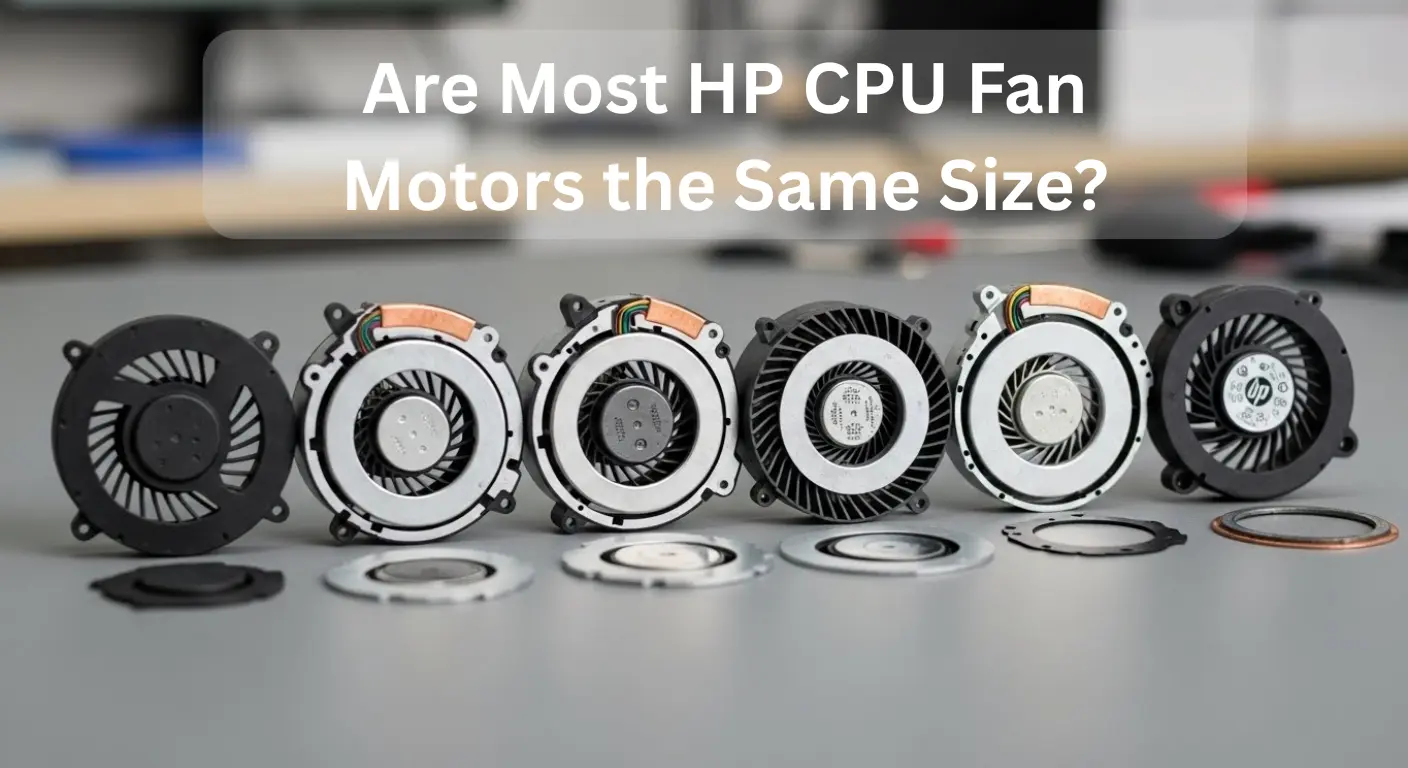
Most HP CPU fan motors are not the same size. Different HP models use different fan sizes, so always check your laptop or desktop model before buying. Using the wrong size can cause overheating or fitting issues.
In this article, we will explore the factors that determine fan motor sizes and help clarify common misconceptions.
Understanding HP Cooling System Design:
Understanding HP Cooling System Design is essential for managing heat in high-performance devices like computers and machinery.
- Purpose of HP Cooling System: Prevents overheating in high-performance devices, such as computers and machinery, ensuring they work efficiently without failure.
- Cooling Methods: Uses fans, liquid cooling, and heat sinks to regulate temperature and maintain performance. These methods are crucial in preventing damage caused by excess heat.
- Benefits: Helps devices run smoothly by reducing heat, which lowers the risk of system failures and extends device lifespan.
- Efficiency: A well-designed cooling system ensures optimal performance, even under heavy use, keeping devices running at peak efficiency.
Reliability: Consistent temperature control maintains reliability during intensive tasks, ensuring long-term durability and performance.
Why Do HP CPU Fan Sizes Differ?
| Reason | Simple Explanation | How It Helps the User |
| Different PC Case Designs | HP makes small, medium, and large PC cases. Each case has space for a different fan size. | Ensures the fan fits properly without blocking parts. |
| Different Cooling Needs | A light-use PC needs less cooling, but a powerful HP workstation needs strong airflow. | Gives the right cooling for your CPU’s heat level. |
| Airflow Requirements | Bigger fans push more air with less noise. Smaller fans spin faster to cool tight spaces. | Keeps your PC cool and stable without overheating. |
| Power & CPU Type | High-performance CPUs generate more heat, so they need larger or higher-speed fans. | Protects your CPU from damage and thermal throttling. |
| HP’s Internal Layout | Each HP model has its own motherboard layout and component placement. | Fan size matches the inside structure for smooth airflow. |
| Noise Control | Larger fans can run slower and quieter, while smaller fans tend to be louder. | Reduces fan noise while maintaining cooling. |
Differences Between Laptops and Desktops:

| Aspect | Laptops | Desktops |
| CPU Fan Motor Size | Small, compact, designed for tight spaces | Larger, powerful, varies by case & CPU type |
| Standardization in HP Devices | Less standardized; changes per model | More standardized, especially in tower PCs |
| Cooling Requirements | Lower power, quiet, energy-efficient fans | High power, strong fans for heavy-duty performance |
| Interchangeability | Rarely interchangeable; model-specific | Some parts can be swapped among similar models |
| Space Constraints | Very limited; smaller fan size | More space allows bigger or aftermarket fans |
| Performance Focus | Optimized for quiet and efficient cooling | Focused on maximum performance and stability |
Why it matters: HP laptop CPU fans are usually small and model-specific, making them quiet and portable, while desktop fans are larger and powerful, designed for high-performance tasks. Understanding these differences helps you choose the right device for gaming, work, or everyday use, ensuring long-lasting performance and reliability.
Read more about: Can a Motherboard Kill Your CPU?
Cooling Needs of Different Processors:
Processors generate different amounts of heat depending on their type, performance, and cores. Choosing the right cooling solution is crucial to keep your CPU fast, safe, and long-lasting.
1. Heat Levels by Processor Type:
- Low-power CPUs: Produce minimal heat; work well with small fans or passive cooling.
- High-performance CPUs: Found in gaming PCs, workstations, and servers; need strong air coolers, heatsinks, or liquid cooling to prevent overheating.
- Multi-core processors: More cores generate more heat, especially under heavy load, requiring efficient and reliable cooling solutions.
2. Cooling in Different Systems:
| Aspect | Compact Systems (Mini PCs, Laptops) | Full-Size Systems (Tower Desktops) |
| CPU Fan Size | Smaller, integrated tightly | Larger, robust fans for better airflow |
| Fan Standardization | Varies; often model-specific | Standardized; easier to upgrade |
| Cooling Efficiency | Limited by space and airflow | High airflow; multiple cooling options |
| Upgradability | Hard to replace fans | Easy fan upgrades and replacements |
| Design Priority | Space-saving, portable | Performance and thermal efficiency |
| Heat Management | Compact heat pipes & small fans | Heatsinks, larger fans, and optional liquid cooling |
- The right CPU cooling depends on processor type, number of cores, and system size.
- Compact systems need smaller, space-efficient cooling solutions.
- Full-size systems can use advanced air or liquid cooling for high-performance CPUs.
- Proper cooling prevents overheating, maximizes CPU speed and lifespan, and ensures smooth performance under heavy use.
How to Find the Right Fan Size for Your HP Model?
To find the right fan size for your HP model, first check your laptop or desktop manual for the exact fan part number. Measure your current fan carefully if you replace it yourself. Match the size, connector type, and airflow specs. Using the correct fan ensures proper cooling, prevents overheating, and keeps your HP running safely and quietly. Always buy from trusted sellers to avoid damage.
Read more about: Can I Keep My Ryzen CPU at 80°C?
Use Tools Like HP Support Assistant or the Official Website:
- Quick Device Check: Use HP Support Assistant to instantly check your laptop, desktop, or printer for errors and performance issues.
- Easy Updates: Automatically download the latest drivers, security patches, and software updates from HP’s official website to keep your device fast and secure.
- Step-by-Step Troubleshooting: HP Support Assistant guides you clearly to fix problems without technical stress, perfect for beginners or non-tech users.
- Official Resources: Visit the official HP website for manuals, FAQs, and model-specific solutions directly from HP experts.
- Safe and Reliable: Avoid risky third-party tools. Official HP support ensures genuine fixes and updates.
- Boost Performance: Regularly using these tools improves speed, stability, and overall device health.
- Trusted by Millions: Millions of users rely on HP Support Assistant and the official website to solve issues efficiently.
What Happens If You Use the Wrong Fan Size?
Using the wrong fan size in your HP system can cause serious problems that affect performance, safety, and lifespan.
- Overheating: A small or incompatible fan can’t cool the CPU or GPU properly, causing your system to slow down, freeze, or shut down unexpectedly.
- Improper Fit: A fan that’s too big or doesn’t match mounting holes may vibrate, make noise, or even damage internal parts.
- Reduced System Performance: Poor cooling can lead to crashes, loud fan noise, and shorten the life of your CPU, GPU, and motherboard.
- Energy Waste & Noise: Wrong fans can consume more electricity and run louder than needed.
- Smart Solution: Always use the correct fan size and exact HP model specifications to keep your system cool, quiet, safe, and high-performing.
Tips Before Buying a Replacement Fan:
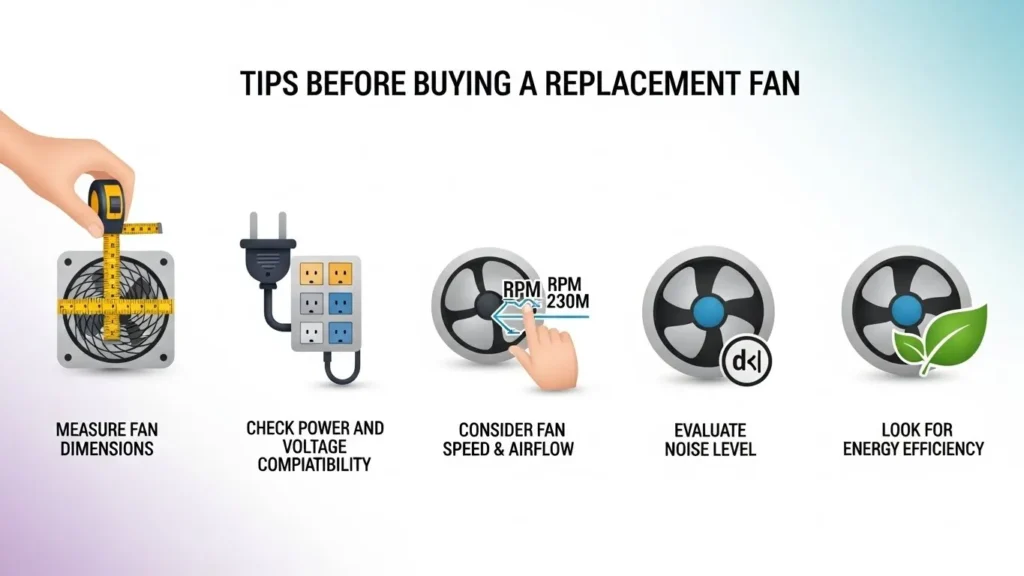
Replacing a fan in your HP laptop or desktop? Make sure you choose the right replacement fan that fits perfectly, cools efficiently, and lasts long. Here’s what to know before you buy:
OEM Fans (Original HP Fans):
These are made by HP for your exact model. They may cost more, but they guarantee a perfect fit, reliable cooling, and full compatibility. Ideal if your device is still under warranty or used for important work.
Third-Party Fans:
These are often cheaper and easier to find. Some offer great performance at a lower price, but others can be noisy, wear out faster, or fit incorrectly.
- Pro Tip: Always check your device model, fan size, speed, noise levels, and reviews before buying. For older devices, high-rated third-party fans can save money without sacrificing quality.
- Why It Matters: A proper fan keeps your HP device cool, fast, and safe, preventing overheating and extending its life. Choosing the right fan shows smart buying decisions.
Where to Buy Genuine Parts?
- HP Official Parts Store: The most reliable source for authentic HP parts, offering model-specific guidance.
- Authorized HP Partners: Trusted sellers like CDW, Insight, or Newegg provide certified HP components that ensure long-lasting performance.
- Avoid risky marketplaces: Be cautious of eBay or low-rated Amazon sellers; fake or mismatched parts can cause damage.
Tip: Always check the part number, connector type 3-pin, 4-pin, etc., and warranty to ensure full compatibility and safety.
Warranty Check and Return Policies?
A warranty check shows if your product is still protected for repairs, replacement, or service. Always check the warranty period, coverage details, and claim process before buying. Return policies guide you on how and when you can return or exchange a product, including time limits, conditions, and refund options. Knowing both clearly helps you save money, avoid problems, and shop with confidence. Always keep receipts and follow instructions to make the process smooth and fast.
Read more about: Can Low Ram Cause Cpu Overheating In a Laptop
FAQ’s:
1. Can I upgrade my HP fan motor to a larger size for better cooling?
No, you typically cannot upgrade to a larger fan motor unless the chassis and motherboard layout support it. HP systems are designed with specific airflow and space constraints, so installing a larger fan could interfere with other components or not fit at all.
2. Are HP fan motors standardised across product lines like Pavilion or EliteBook?
No, even within the same product line, HP fan motors can vary in size and design due to differences in thermal requirements, form factors, and internal layouts between models and generations.
3. Do HP fan motors have different connector types?
Yes, HP fans can use different connectors, such as 3-pin or 4-pin headers. It’s essential to match the fan’s connector type with your motherboard to ensure proper power delivery and speed control.
4. Is the fan motor size the same as the fan blade size in HP systems?
Not precisely. Fan motor size refers to the core component driving the blades, while fan blade size impacts airflow. Two fans with the same motor size may have different cooling performance due to blade design and RPM capabilities.
5. How can I tell if a fan motor is failing, regardless of size?
Signs of fan motor failure include loud noises, inconsistent spinning, overheating warnings, or the fan not spinning at all. Use HP diagnostics or third-party tools to check fan RPM and temperature trends.
Conclusion:
Most HP CPU fan motors vary in size depending on the model, CPU type, and system design. Choosing the correct fan ensures optimal cooling, quiet operation, and system longevity. Always verify your HP model, part number, and connector type, and buy genuine or trusted replacements. Proper cooling protects performance, prevents overheating, and guarantees your device runs safely and efficiently.
Read more about: Is World of Warcraft CPU or GPU-intensive?